
Blueprint Workshop for Video Projects That Work
- Mark Crews
- 6 days ago
- 6 min read

A video project usually goes off track long before the camera shows up. The problem is rarely effort. It is misalignment. A blueprint workshop for video projects gives business owners and marketing teams a clear place to make the key decisions early, before budget gets wasted on revisions, unclear messaging, or content that looks good but does not move the business forward.
For many organizations, video feels deceptively simple at first. You need a commercial, a brand story, a recruiting piece, or a training video, so the instinct is to start with concepts, shot lists, or scheduling. But those pieces only work when the foundation is solid. If the team has not agreed on audience, goal, message, offer, tone, and distribution, production becomes expensive guesswork.
What a blueprint workshop for video projects actually does
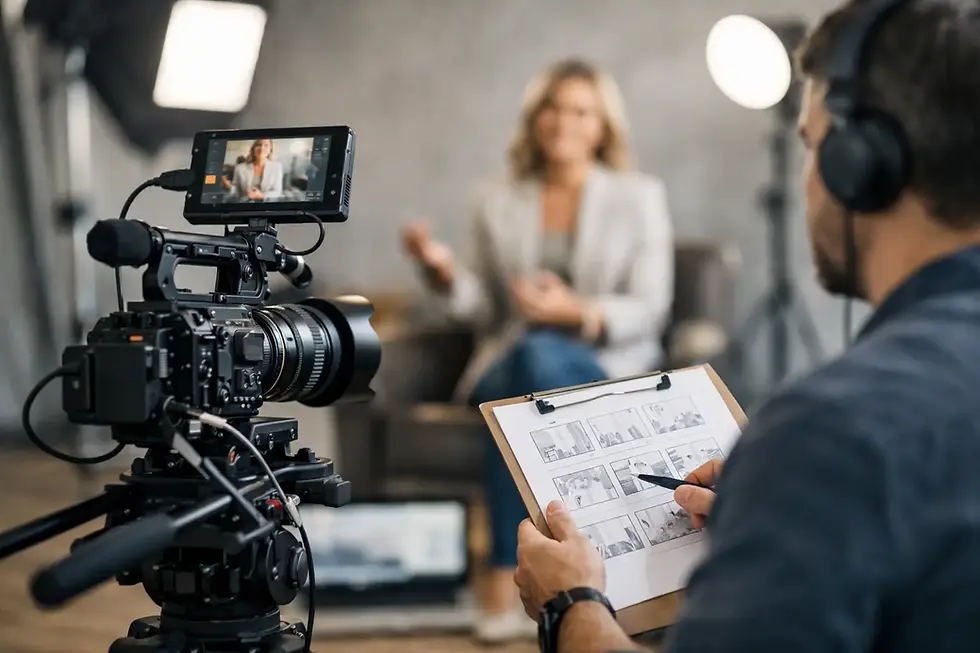
At its best, a workshop is not a brainstorming session with loose ideas on a whiteboard. It is a guided pre-production process that turns business goals into a usable production plan. That distinction matters.
A strong workshop connects the creative side of video with the operational and marketing side. It clarifies what the video needs to accomplish, who it needs to reach, what action it should encourage, and how success will be measured. It also surfaces practical constraints early, including timeline, approval process, internal stakeholders, brand requirements, and existing assets.
This is the point where strategy becomes concrete. Instead of saying, "We want something polished," the team defines what polished means for this brand and audience. Instead of saying, "We need more awareness," the team decides whether the video should educate, convert, recruit, reassure, or support sales conversations. That level of clarity changes everything downstream.
Why skipping the workshop creates avoidable problems
When businesses skip this step, the same issues tend to show up. Messaging gets too broad because no one agreed on a primary audience. The call to action stays vague because the business goal was never narrowed. Stakeholders request major changes late in the process because expectations were not aligned at the start.
This is where production timelines stretch and budgets get stressed. The team may end up filming scenes that do not support the final edit, or they may realize after launch that the video is attractive but hard to use in an actual campaign. None of this happens because people are careless. It happens because video combines branding, sales, communication, and logistics. Without a structured planning phase, those priorities compete instead of working together.
A workshop lowers that risk. It gives everyone a common reference point before scripting, scheduling, and filming begin.
The core decisions a video blueprint workshop should cover
Every business has different needs, but a productive workshop usually addresses the same categories.
Business objective
The first question is not what kind of video you want. It is what business outcome you need. That could mean increasing qualified leads, improving conversion on a landing page, supporting a service launch, shortening the sales cycle, improving hiring efforts, or strengthening internal training.
The answer affects every creative choice that follows. A recruiting video should not be built like a direct response commercial. A brand film for investor confidence should not follow the same structure as a product explainer. Good strategy prevents good-looking mismatches.
Audience definition
Many teams say their audience is "everyone we serve," but that rarely leads to effective messaging. A workshop helps narrow the real viewer. Is this content for first-time prospects, warm leads, referral partners, donors, patients, applicants, or existing customers?
The more specific the audience, the more useful the video becomes. Tone, pacing, proof points, visuals, and script language all improve when the target viewer is clearly defined.
Core message and positioning
This is where a lot of projects either gain traction or lose it. If the team cannot state the key message in plain language, the script will struggle. A workshop should clarify what the audience needs to understand, why your business is credible, and what makes your offer different.
That does not mean forcing a slogan into every project. It means identifying the strategic message that the creative work needs to support. In some cases, that message is emotional. In others, it is practical. Often, it needs both.
Distribution and use case
A video built for a website homepage may need a different structure than one built for paid ads, a trade show, internal training, or an email nurture sequence. Length, pacing, aspect ratio, and editing style depend on where the content will live.
This is one of the biggest advantages of planning early. When distribution is discussed upfront, production can be designed to generate multiple assets from the same shoot. That improves efficiency without watering down quality.
Scope, approvals, and logistics
Creative quality depends on logistics more than most people expect. Who has final approval? Who is on camera? What locations are available? Are there legal or compliance concerns? Is the timeline fixed because of an event, launch date, or campaign window?
A blueprint workshop brings those details into the open before they become delays. That may not sound glamorous, but it is often what keeps a project moving.
What the workshop should produce by the end
A useful workshop leads to decisions, not just discussion. By the end, the team should have a clear direction for concept development, messaging, script priorities, production scope, and launch intent.
In practical terms, that may include a defined project goal, audience profile, messaging framework, creative direction, production requirements, and content plan. For some businesses, it may also shape a broader campaign where one hero video supports several shorter assets. For others, it may confirm that a simpler production approach is the better fit.
That last point matters. More production is not always better production. Sometimes the right answer is a high-impact shoot with a cinematic finish. Sometimes it is a streamlined content package designed for speed and consistency. A good workshop helps you choose based on outcomes, not assumptions.
How this process protects brand and budget
Business leaders often think of pre-production as a way to organize the creative team. It does that, but it also protects the client.
A workshop reduces the chance of paying for content that cannot be used effectively. It helps avoid expensive mid-project pivots caused by unclear messaging or late stakeholder input. It also creates a stronger standard for evaluating whether ideas belong in the project at all.
That discipline is especially valuable for growing businesses. As more people join the conversation, projects can drift. Sales wants one thing, leadership wants another, and marketing is left trying to merge competing priorities. A workshop creates alignment early enough to keep the project focused.
From a brand standpoint, it also protects consistency. If your business has worked hard to build trust, your video should reflect that with intentional messaging, visual style, and audience fit. That does not happen by accident.
When a blueprint workshop matters most
Not every project needs the same level of strategic planning, but some situations benefit from it more than others.
It is especially valuable when a business is investing in a flagship brand video, launching a campaign with multiple assets, entering a new market, updating stale messaging, or managing several stakeholders. It also matters when past video efforts have underperformed and the team is not fully sure why.
If your organization already has strong internal clarity, the workshop may move quickly. If your goals are still forming, it may uncover important strategic questions that need attention before production starts. Either way, that time is rarely wasted. It is far less costly to refine a plan than to rework a finished edit.
The difference between a vendor and a strategic partner
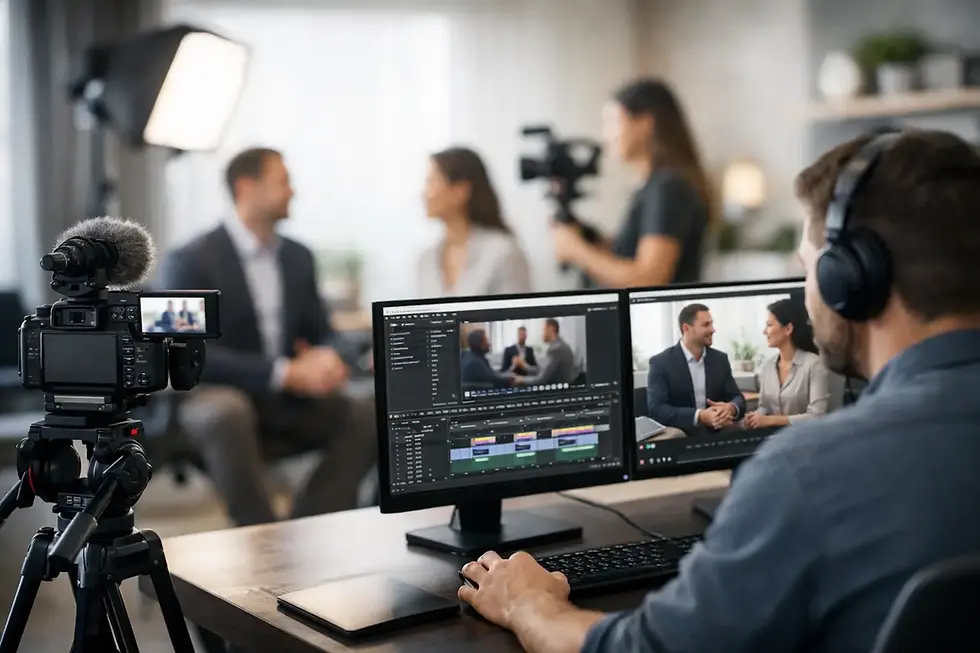
A production vendor can show up, capture footage, and deliver files. Sometimes that is enough. But when video is expected to support growth, strengthen brand perception, and contribute to conversion, the planning process matters just as much as the camera package.
That is where the workshop becomes a real differentiator. It reflects a service model built around guidance, not just execution. Instead of asking clients to manage strategy on their own, the right partner helps shape the project so the creative work serves a clear business purpose.
Finished Works uses this kind of structured approach because clients do not need more complexity. They need confidence that the project has a plan, that the team is aligned, and that the finished content will do more than fill space on a website.
A smart start changes the whole project
The value of a blueprint workshop for video projects is simple. It replaces uncertainty with direction. It gives creative teams better inputs, gives stakeholders clearer expectations, and gives businesses a stronger chance of getting video content that performs in the real world.
If you are planning a video and feeling pressure to get it right, the best next step may not be choosing shots, locations, or music. It may be slowing down just enough to define what success should look like before production begins. That is often the decision that makes the rest of the project easier.

Comments