
What Video Storytelling Services Really Do
- Mark Crews
- 3 days ago
- 6 min read

Most business videos do not fail because the camera work is bad. They fail because the story is unclear, the message is too broad, or the video never had a real job to do in the first place. That is where video storytelling services make a measurable difference. When the process is strategic from the start, video stops being a creative expense and starts working as a business asset.
For marketing teams and business owners, that shift matters. You may already know video helps with visibility, trust, and conversion. The harder part is creating content that actually fits your brand, supports a campaign, and moves people toward a decision. Good storytelling closes that gap.
What video storytelling services actually include
At a practical level, video storytelling services are not just about filming interviews and layering in music. They bring structure to how your message is developed, how your audience is considered, and how the final piece is shaped to support a specific business outcome.
That usually starts before a camera ever comes out. A strong team will help define the purpose of the video, the audience it needs to reach, and the action it should encourage. Sometimes that action is a sale. Sometimes it is a consultation request, an internal training goal, a donor appeal, or a stronger first impression for your brand.
From there, the work moves through planning, scripting or messaging development, production, editing, and launch preparation. The creative side matters, but so does operational discipline. Without both, even a beautiful video can miss the mark.
Why strategy matters in video storytelling services
A polished video can still underperform if it is built around vague messaging. Many businesses have experienced this firsthand. They invest in production, receive a finished piece that looks impressive, and then struggle to use it effectively because it was never aligned to a larger marketing goal.
That is why strategy should lead the process. The best video storytelling services ask questions that go beyond visuals. What does your customer need to understand before they trust you? Where will this video live? What objections should it address? What stage of the buyer journey is it meant to support?
Those answers influence everything from length and pacing to tone and call to action. A homepage brand video needs a different structure than a recruiting film or a customer case study. A social ad needs to earn attention quickly. A fundraising story may need more emotional buildup. The right format depends on the job the content needs to do.
The business case for story-led video
Storytelling is not a soft concept. In business video, it is the method that helps people follow your message, remember your brand, and understand why they should care.
Facts alone rarely carry a video. Viewers need context. They need to see a problem, a perspective, a transformation, or a clear promise. Story gives your audience a reason to stay engaged long enough to absorb the information you want them to remember.
That does not mean every video has to feel dramatic or cinematic in an obvious way. In many cases, the most effective story is simple. A customer had a challenge. Your team helped solve it. Life or work improved afterward. A company had a mission, a process, and a reason for doing things differently. Those are all stories, and when they are told with clarity, they build trust much faster than generic promotional language.
What separates effective video storytelling from generic production
The difference usually comes down to intent. Generic production focuses on capturing footage. Effective storytelling focuses on shaping meaning.
That means asking better questions in pre-production, not just on set. It means deciding what the audience should feel, know, and do after watching. It means understanding that editing is not just assembly. It is where narrative, pacing, and brand positioning come together.
There is also an important balance between creativity and control. Businesses need content that feels human and engaging, but they also need consistency, timelines, approvals, and brand alignment. A reliable production partner brings both. The creative team should be able to make strong visual choices while still working within a clear process that reduces surprises.
For many organizations, this is the real value. You are not just hiring people to make a video. You are hiring a team that can guide the project, reduce internal guesswork, and keep the final product tied to results.
How the process should work
If you are evaluating video storytelling services, pay close attention to the workflow. Process is often what determines whether a project feels organized or stressful.
A strong engagement starts with discovery. This is the stage where business goals, audience priorities, messaging themes, and production needs are clarified. It helps prevent the common problem of making creative decisions too early, before the strategy is fully defined.
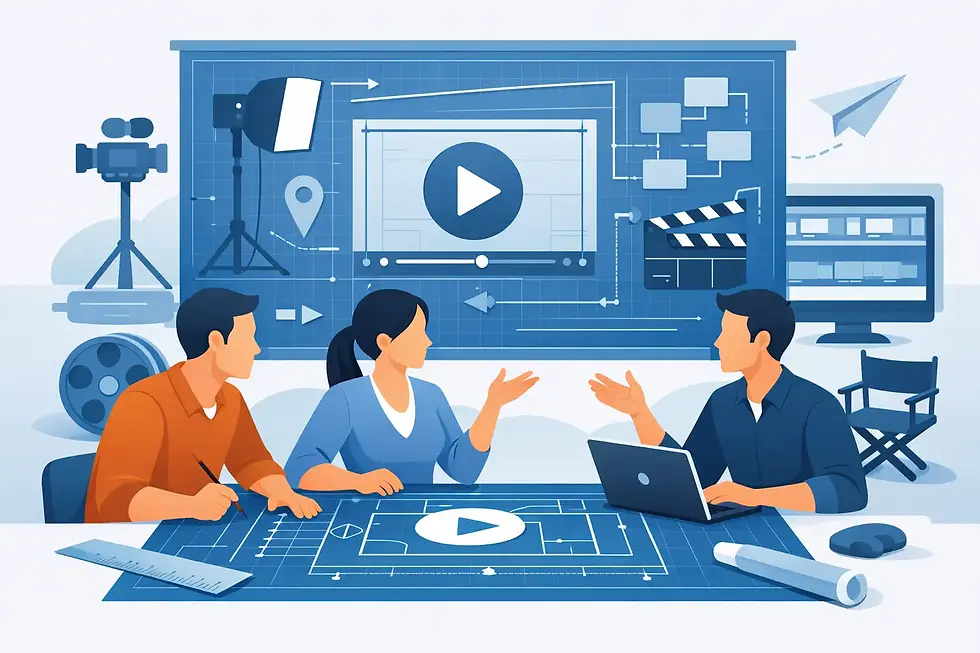
Pre-production is where that strategy becomes actionable. Messaging gets refined. Interview prompts or scripts are built. Shot lists, schedules, logistics, and visual direction are aligned. This stage is not glamorous, but it is where confidence is built. When planning is thorough, production days are more efficient and the final edit has a much better foundation.
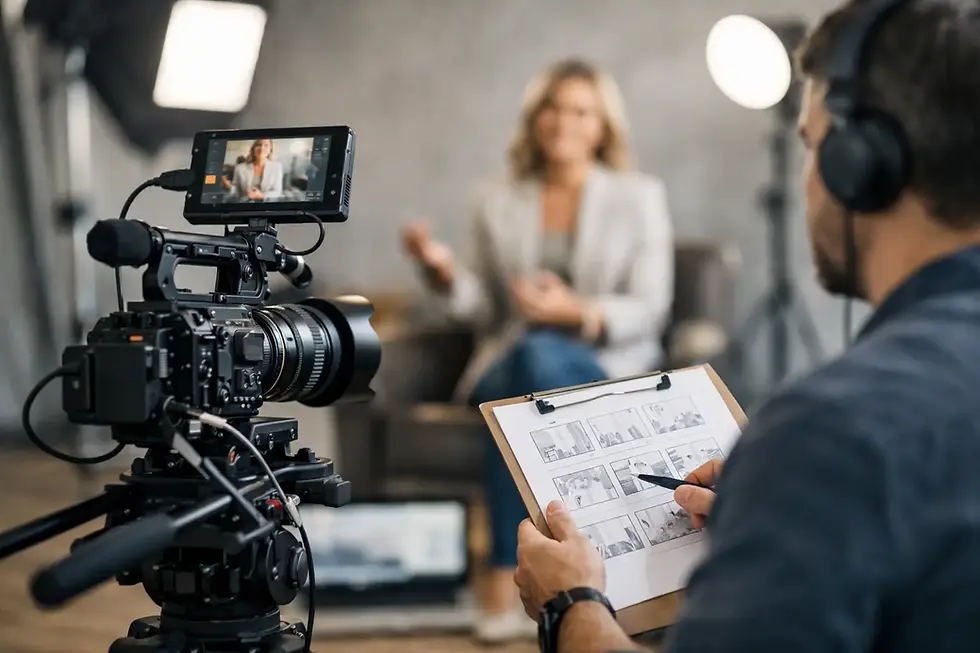
Production should feel focused, not chaotic. The crew needs enough flexibility to capture authentic moments, but the day still needs structure. That is especially true when executives, staff, clients, or community partners are on camera and time is limited.
Post-production is where the story sharpens. Editing decisions determine whether the final video feels clear and persuasive or scattered and forgettable. Music, graphics, sound design, and pacing all support the message. Review rounds should be managed carefully so feedback improves the story instead of diluting it.
Then comes launch. This is the stage many providers leave to the client, but it deserves more attention. A video performs better when there is a plan for placement, cutdowns, campaign use, and audience targeting. Content works harder when it is prepared for how people will actually encounter it.
When video storytelling services are worth the investment
Not every business needs a large-scale production for every marketing need. Sometimes a simple video, captured efficiently and edited cleanly, is enough. The right level of production depends on your goals, brand position, and how long the content needs to serve you.
Video storytelling services are especially valuable when the message is complex, the stakes are high, or the content needs to support more than one business objective. That includes brand videos, customer testimonials, organization profiles, recruitment campaigns, fundraising stories, and thought leadership content.
They are also worth considering when your internal team is stretched. Many marketing departments know what they want to accomplish but do not have the bandwidth to coordinate strategy, scripting, filming, editing, and rollout. In that case, an experienced partner brings both execution and relief.
The trade-off is budget and timeline. Strategic video takes more planning than quick-turn content. It asks for alignment upfront. But when the content is meant to represent your brand in a serious way, that extra discipline is usually what protects your investment.
Choosing the right partner for video storytelling services
A portfolio matters, but it should not be the only factor. Strong visuals are important, yet they do not tell you how the team communicates, how projects are managed, or whether the company can connect creative work to business priorities.
Look for a partner that asks thoughtful questions early. They should want to understand your audience, your goals, your constraints, and how the video will be used after delivery. If the conversation starts and ends with cameras, editing style, or drone footage, the strategic layer may be missing.
It also helps to look for a team with a defined process. Clarity around planning, approvals, production workflow, and post-launch support usually leads to a smoother experience. For businesses that want high-quality video without carrying the project alone, that structure is not a bonus. It is part of the service.
Finished Works is one example of this approach, combining cinematic production with a guided workflow that helps clients move from concept to launch with less uncertainty and stronger alignment.
What good storytelling leaves behind
The best business videos do more than explain what you do. They make your value easier to understand and easier to remember. They give your audience a clearer picture of who you are, why your work matters, and what step to take next.
That kind of clarity rarely happens by accident. It comes from a process that respects both story and strategy, and from a team that knows how to turn ideas into content with a real job to do.
If your current video efforts feel scattered, inconsistent, or too hard to manage internally, that is usually not a sign to give up on video. It is a sign to approach it with more structure, better messaging, and a story your audience can actually follow.

Comments